Founder’s note
Born at −5
What Afroconomy is building, and the failures that taught its founder to build it this way.
This is not a blog. It is an ecosystem.
Afroconomy is not one metaphor and it is not one book. It is an ecosystem with three parts that feed each other. A pan African economic publication, free to every reader, permanently, covering all 54 African economies in English and, page by page, in French, Arabic, Portuguese and Swahili: AI sifts hundreds of sources and drafts the first pass, humans keep editorial and compliance control over every word that goes out under this name. A business platform, Afroconomy Studio, sells reach into the exact audience that free publication earns, because a reader who trusts a free newsroom is worth more to a business than one reached through a stranger’s ad network. And underneath both, the oldest part: training African developers and operators, paying them to learn, sending skill and income back into Lagos instead of out of it.
None of the three works without the other two. The publication has no audience worth selling into if nobody reads it for free. Studio has nothing to sell the moment the publication ever asks a reader to pay. And the whole thing runs on people trained by this organisation before it ever published a headline. That is the ecosystem, not a media company with an ads department bolted on: one system built to move attention, trust and skill between three parts that are each worth less alone.
The math of minus five
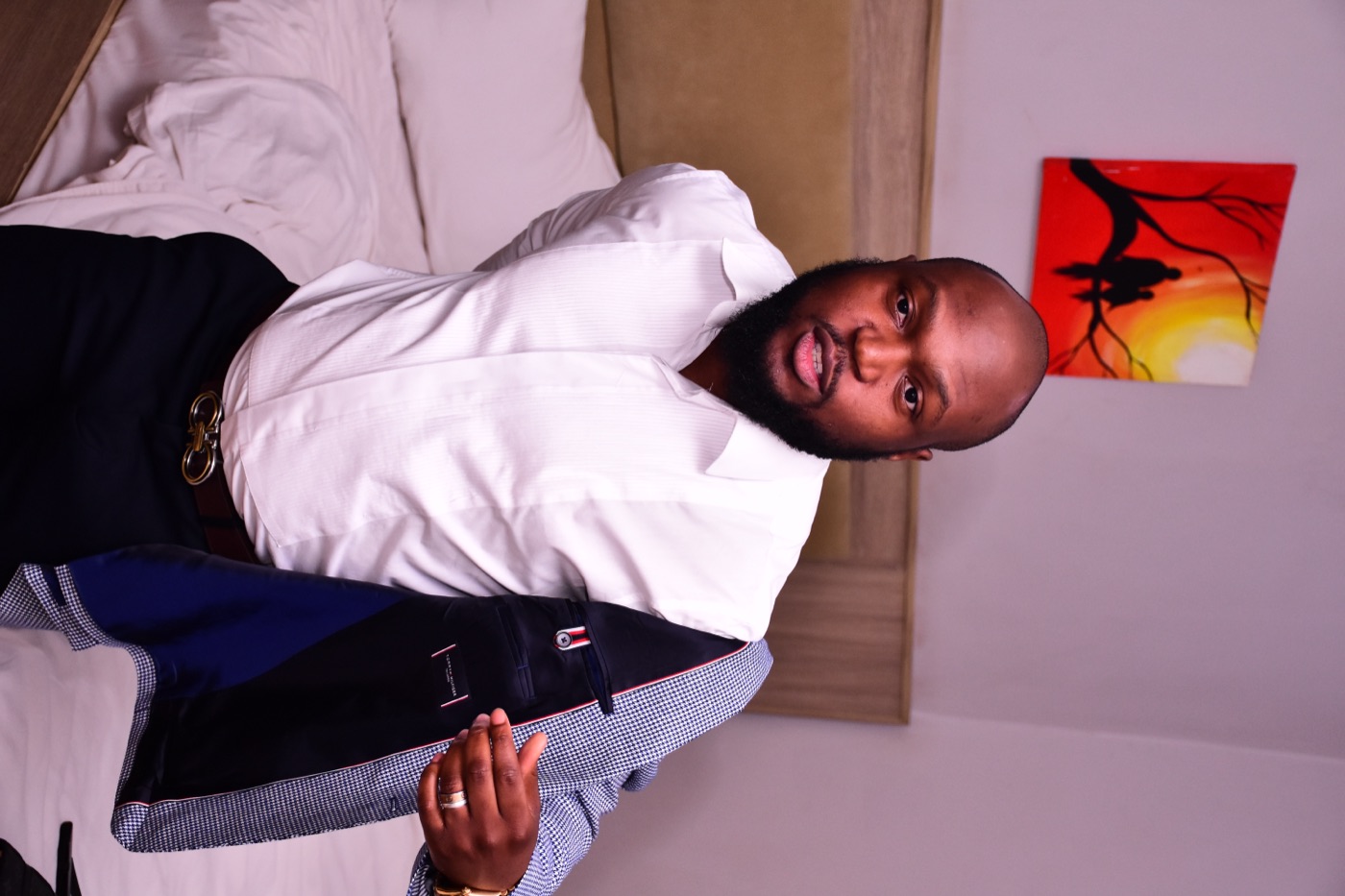
If you are born into a wealthy family in the West, you start life at +5. A safety net, a strong currency, a passport that opens doors. I was born in Idumu, Lagos, and raised in Gowon Estate, Ipaja. I did not start at zero. I started at −5.
We lived on the ground floor of a block of flats, and every morning was a tactical operation: the gutters from the floors above overflowed onto our doorstep overnight, so before school, before work, the whole family scaled the balcony railing and jumped clear of it, in our uniforms, in our work clothes. One slip and your day was ruined before it began. That is not a metaphor I reached for later to make a point. That was Tuesday.
“You want to start a business? Jump over the lack of power supply. You want to save money? Jump over the inflation. We have been jumping from balconies our whole lives.”
Thirteen failures, then one system
I built a piece of billing software for cybercafés in Isashi, Lagos. It worked exactly as promised. The owner who agreed to install it never paid me: a product is not a business if you have no leverage to collect. That lesson is why a business’s Studio dashboard shows real, measured performance today rather than a number I ask anyone to trust.
I built a dating app, Dom3x, that grew fast and then vanished overnight when Apple and Google pulled it for unmoderated content I had never bothered to police.
“Distribution is king, but compliance is queen.”
I had none. That is why every listing, advert and column on Afroconomy passes a human editor before it is public, and why an election poll needs a ratified legal ruling before it can run at all: distribution without compliance is how you lose the whole thing overnight.
The failure that changed how I build came later, and it was not software at all. A friend and I funded a rice farm in Benue State properly: land, seedlings, labour, the lot. It was extorted at every checkpoint, grazed flat by cattle with nowhere else to go, and finally stripped bare by the surrounding community in the week we left to collect a writing award. Nobody stole a single line of code from any failed piece of software I ever built. A field of rice, they took entirely, in a week. Where physical assets are that exposed, a physical asset is a liability, and a skill, a listing, a reputation you have actually earned, is not. That is why the entire reader side of Afroconomy is free, permanently, indexable by every search engine, with no paywall anywhere: an audience cannot be grazed flat by cattle or harvested at a checkpoint.
The vision
Even the doctorate is not decoration. My research was on retrieving what matters from large, noisy, unstructured text collections, the exact problem Afroconomy’s own ingestion pipeline solves every day, pulling from hundreds of African sources. I did not learn artificial intelligence and then look for somewhere to use it. I built the system because I already knew how to make a machine find the signal in a pile of noise, and Africa’s economic news was exactly that kind of pile.
The goal was never a media company that also happens to sell ads. The goal is an ecosystem where a reader’s attention, earned honestly and never paid for, is what makes a verified African business worth finding and worth trusting, at a price that business can afford without ever having raised a round. Most African businesses I have watched fail did not fail on quality. They failed on being invisible. That is the problem this exists to close, one verified listing and one honestly earned reader at a time.
Education, not experience
Self-taught programmer before I was a funded one, on a borrowed dining chair, off a cousin’s electricity, years before any certificate said so: that discipline is where the engineering culture here actually comes from, not the PhD that came after. Nigerian Military School came before even that. Formally: a PhD in Artificial Intelligence, Natural Language Processing, and an MSc in Advanced Computer Science with distinction, both from the University of Huddersfield; a BSc in Physics with Electronics from Redeemers University, taken to stay grounded rather than out of love for the subject; and certifications as a Certified Ethical Hacker, an Oracle Certified Java SE Professional, and an Oracle database administrator, each self-taught first and formalised after. None of it, on its own, has ever paid a bill. What has is building things that work for people who started where I started.
The fuller personal story is in my book, Born at −5. The ecosystem itself, the publication, Studio, and the businesses already listed in it, is the rest of this site.